 Tree SonsTree Service
Shrewsbury has some of the oldest, densest tree canopy in this part of Worcester County — the neighborhoods around Lake Quinsigamond and the established streets closer to Main Street were planted with big shade trees decades ago, and most of them are still standing. That's a good thing for shade and curb appeal, and it also means a lot of Shrewsbury homeowners eventually run into the same handful of tree problems. We work in Shrewsbury regularly (see our Shrewsbury tree service page for what we cover), and these are the issues we get called about most.
Storm-damaged limbs
Central Mass gets its share of high wind, ice, and heavy wet snow, and Shrewsbury's tall, mature trees take the brunt of it. After a storm, look for broken or hanging branches (widowmakers), splits at a branch union, or a limb resting on the roof, gutters, or wires. A single hanging branch high in the canopy is usually a trimming job — cut it out clean and the tree is fine. A trunk that's split or a tree that's now leaning toward the house is a different situation and usually means removal. Either way, don't wait on storm damage near a roofline; it rarely gets safer sitting there.
Oaks and maples growing into rooflines and gutters
This is the most common call we get in Shrewsbury's older neighborhoods. A maple or oak planted 30-40 years ago as a nice shade tree is now taller than the house, with branches resting on the roof or dropping leaves and seed pods straight into the gutters every fall. Left alone, that contact wears down shingles, clogs gutters, and gives squirrels a direct path to the attic. In almost every case this is a trim, not a removal — a crown lift or selective pruning to clear the roofline and pull branches back a safe distance from the house. We only recommend removal if the tree itself is declining or the lean makes it unsafe to keep that close.
Weak or invasive species splitting under their own weight
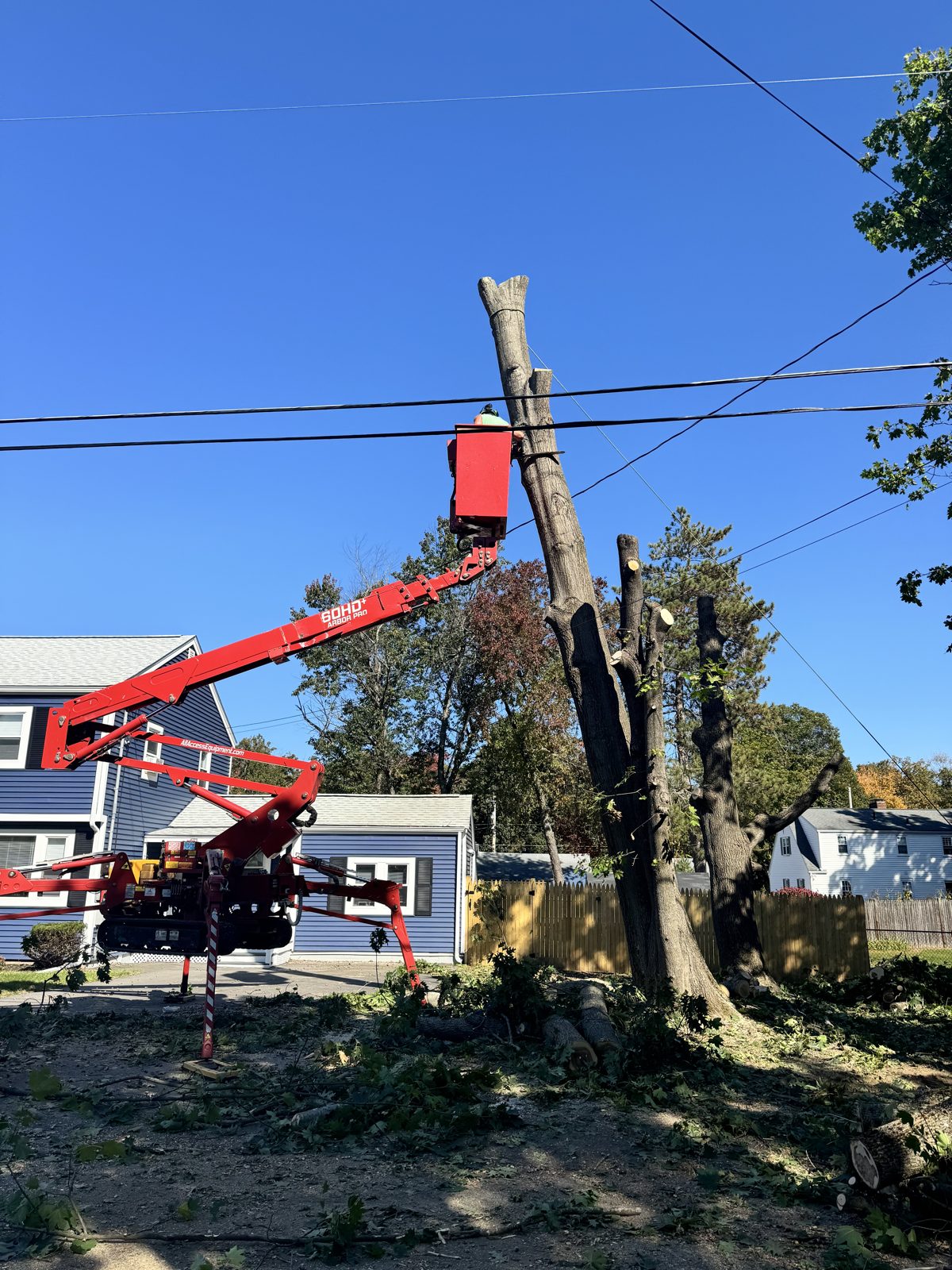
Not every tree species ages the same way. Silver maple, Norway maple, and fast-growing ornamentals like Bradford pear are common around Shrewsbury properties, and they share a weakness: fast growth means weak wood and narrow branch angles that split easily in wind or heavy snow. Norway maple is also invasive and tends to crowd out healthier native trees nearby. If you've got one of these species with a tight, V-shaped branch union or a history of dropping limbs, it's worth having it looked at before the next storm rather than after. Depending on the tree's structure and how close it sits to the house, that can go either way — a strategic trim to reduce weight and remove weak unions, or a full tree removal if the structure is too far gone to fix.
Root issues near foundations and driveways
Shrewsbury has plenty of properties with big trees planted close to the house or driveway — common in neighborhoods built before anyone thought about mature root spread. Over the years, surface roots from maples and oaks can lift and crack driveways, buckle walkways, and in some cases grow close enough to a foundation to cause settling or drainage problems. Cracked pavement radiating out from the base of a tree, or a driveway that's visibly humped near the trunk, are the signs to watch for. Root damage doesn't always mean the tree has to go — sometimes root pruning or regrading solves it — but if the tree is already undermining the foundation, removal is usually the more honest answer, and we'll tell you straight if that's the case.
Dead sections after a wet winter
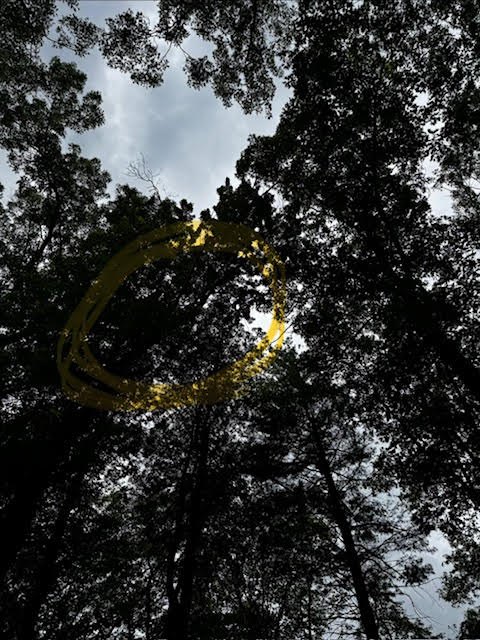
After a wet, heavy winter like we've had recently, it's common for part of a tree to leaf out fine everywhere except one section — a branch, a whole side, or the top of the canopy staying bare while the rest of the tree greens up. That's usually root stress, disease, or storm damage from earlier in the season finally showing. A dead branch or two on an otherwise healthy tree is a trim. A tree that's dead through a third or more of its canopy, or showing fungus at the base, is telling you it's in decline — that's when we'd recommend removal rather than spending money trying to save a tree that's already going.
When it's a trim vs. when it's a removal
As a general rule: if the problem is limited to specific branches — deadwood, storm damage, growth into a roofline — and the trunk and root system are sound, trimming solves it and the tree keeps its value on the property. If the trunk is split, the tree is leaning more than it should, the root system is compromised, or a large share of the canopy is dead, removal is the safer and usually the cheaper long-term call, since repeated trimming on a declining tree adds up. We wrote a full breakdown of how we make that call in Trim It or Remove It? — worth a read if you're weighing the decision yourself. And if removal turns out to be the answer, our tree removal cost guide covers what that typically runs in Central Mass.
Get a Shrewsbury property checked out
If any of this sounds like a tree on your property, don't guess from the ground. We've been working on trees in Shrewsbury and the surrounding towns since 2013, and a free, same-day estimate is the fastest way to know what you're actually dealing with — and what it'll cost to fix.