 Tree SonsTree Service
Should you trim your tree or take it down? Most homeowners ask us this the second they spot a problem — a broken limb, a lean that wasn't there last year, a bare patch in the canopy. The honest answer is that it depends on where the damage is, not how bad it looks from the driveway. Damage confined to branches can almost always be corrected with a trim. Damage in the trunk or root system is a different story, and that's usually when a tree needs to come down. We've been making this call on properties across Northborough and Central Massachusetts since 2013, and here's how we think it through.
Signs your tree just needs a trim
These are the situations where trimming is the right, and cheaper, answer. The tree itself is healthy — it just needs some correcting.
- A few dead or broken limbs. Isolated dead wood in an otherwise healthy canopy is normal. Cut it out and the tree is fine.
- Crossing or rubbing branches. Limbs that cross and rub against each other wear through bark over time and invite disease. A trim opens up the structure before that becomes a real problem.
- Growth pushing into the roofline, gutters, or siding. Branches scraping your roof or hanging over the house aren't a removal issue — they're a clearance issue. Cut them back and the tree stays.
- Growth near power lines. Same idea. Limbs reaching toward wires need to be pruned back for safety, not the whole tree taken down.
- Minor storm damage. If a storm snapped a branch or two but the trunk and main leaders are intact, cleaning up the damage is usually all it needs.
A good trim also does the tree a favor long-term — thinning a dense canopy reduces wind resistance, which is one of the best things you can do to help a tree survive the next Nor'easter.
When to remove a tree
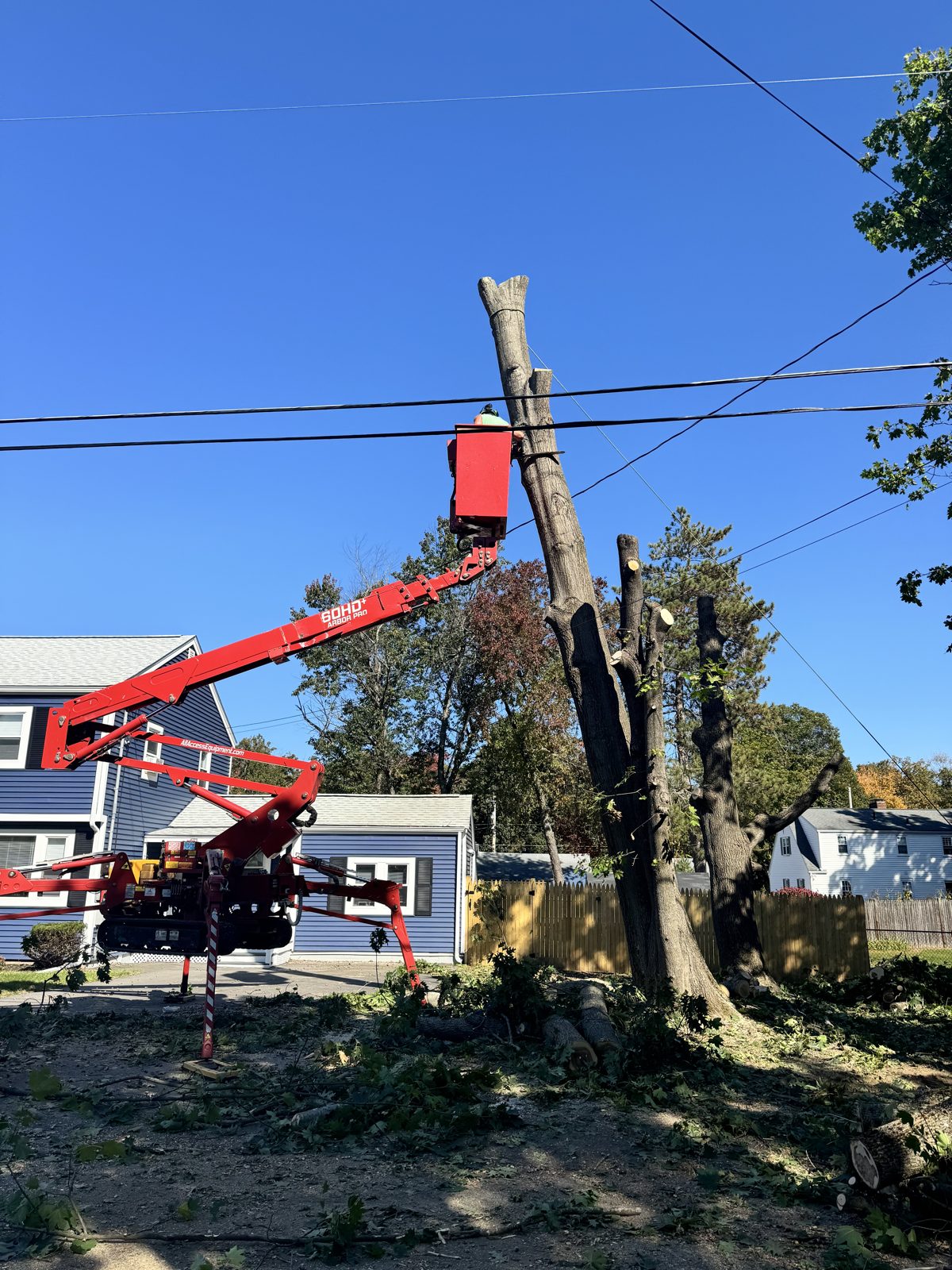
Some problems aren't fixable with pruning shears because they're not in the branches — they're in the part of the tree holding everything up. These are the signs that point toward removal:
- Large sections of dead canopy. If roughly a third or more of the tree is dead, trimming out that much wood usually leaves the tree unstable and unlikely to recover.
- A significant lean, especially a new one. A tree that's always leaned slightly is often fine. A lean that's gotten worse, or shows up with the soil cracking or heaving on one side, means the root plate is failing — that's a real hazard.
- Cracks or splits in the trunk. A vertical crack, a seam, or a split where a major limb meets the trunk is a structural failure waiting to happen, not something a trim can fix.
- Fungus or soft, spongy wood at the base. Mushrooms growing at the base or on the trunk are often a sign of internal rot. By the time you can see it, a fair amount of the tree's structural wood may already be compromised.
- Storm damage beyond saving. A split trunk, a torn-up root plate, or a tree that's already halfway down usually can't be pruned back to healthy — see our tree emergency guide if you're dealing with this right now.
- Roots pushing into the foundation, driveway, or sewer line. If a tree's root system is actively damaging your house or utilities, trimming the branches doesn't touch the actual problem underground.
How we tell the difference on your property
Photos and phone descriptions only go so far — that's why every estimate is done in person. We look at three things: the canopy (how much is alive and how it's structured), the trunk (any cracks, cavities, or included bark where limbs meet), and the base and root flare (fungus, heaving soil, soft wood). Most of the time, two of those three tell us everything we need to know. When it's close, we'll say so, and we'll walk you through what we're seeing and why, not just hand you a number.
We don't push removals
Removal is a bigger job, and for us that just means more equipment and more time — it isn't the outcome we're rooting for. We know these are often trees people planted, grew up under, or picked out for their yard on purpose. If a trim keeps a tree standing safely, we'd rather do that and earn the call the next time something actually needs attention. When removal genuinely is the right call, we'll explain exactly why, and we'll haul everything away and leave the yard clean. If you want the stump gone too, stump grinding is a separate step we can quote at the same time — it's never automatically bundled into a removal price.
If you're not sure, get a free look
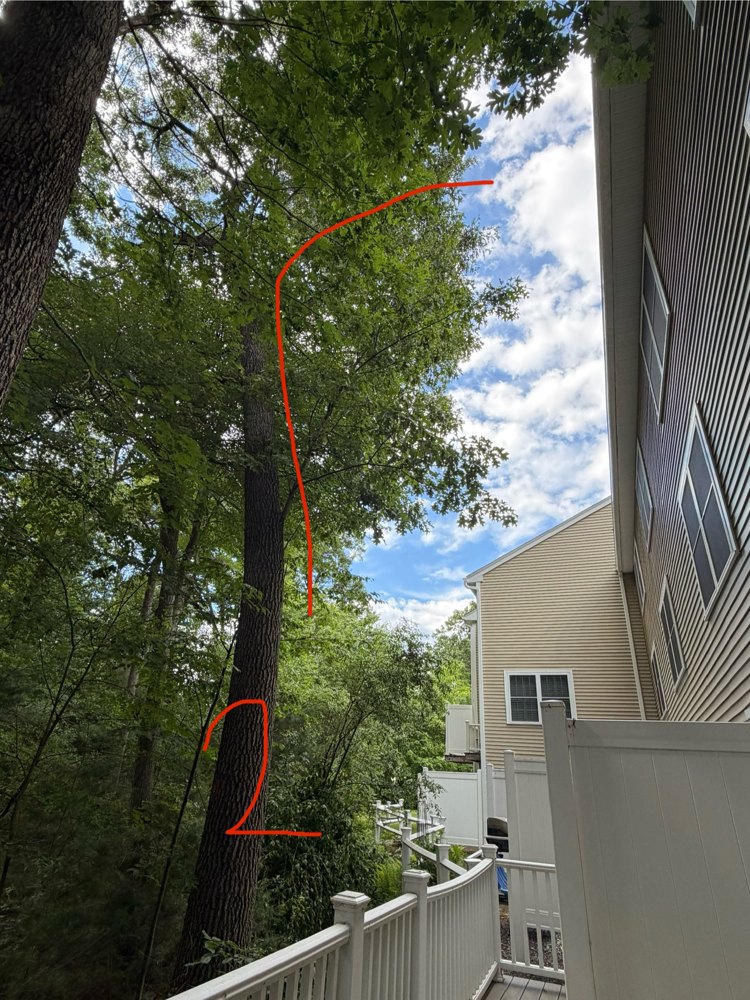
Most people can't tell from the ground whether a lean is new, whether that mushroom at the base means anything, or whether a crack goes all the way through. That's exactly what a free estimate is for. We'll walk the property, look at the tree up close, and give you a straight answer — trim, remove, or leave it alone — with a written quote if any work is needed. No pressure, no upsell, usually same-day.