 Tree SonsTree Service
A tree just came down — on your house, across the driveway, or into the yard — and you need to know what to do right now. The first move is always the same: get everyone away from the tree and out of any room it's touching, stay well clear of anything near power lines, and don't attempt to cut or move it yourself. Once people are safe, document the damage with photos and call a tree crew to make the property safe. We've handled storm and emergency calls across Northborough and Central Massachusetts since 2013, so here's exactly what to do, in order.
Step 1: Get everyone away from the tree
Before anything else, clear the area. If the tree hit the house, stay out of the rooms directly underneath and don't go up into an attic or second floor to look around — a compromised roof or ceiling can give way without warning. If it's in the yard or on a car, keep kids and pets back. A tree that looks settled can still shift as broken limbs finish falling or the trunk continues to sag.
Step 2: Stay away from anything touching wires
If any part of the tree is touching a power line — even a small branch — treat the whole tree, the ground around it, and anything it's resting on as electrified. Don't touch the tree, a fence it's leaning on, or a car it landed on. Keep everyone at least the length of the tree away and call your power company right away. National Grid and Eversource both serve Central Massachusetts, and either will send a crew to make the lines safe before any tree work can start. This is not something to wait on — downed or damaged lines are the single most dangerous part of any tree emergency.
Step 3: Don't try to cut it yourself
We get why the instinct is to grab a chainsaw and start clearing — it's your driveway, your roof, your yard. But a fallen or hung-up tree is almost always still under tension. Branches can be bent like springs, the trunk can be balanced in a way that isn't obvious, and a single cut in the wrong spot can cause a sudden shift, roll, or drop. Combine that with wet ground, storm debris, and possible wire contact, and it's one of the more dangerous situations in tree work. Leave it alone until a trained crew with the right rigging and equipment can assess it.
Step 4: Document it for insurance
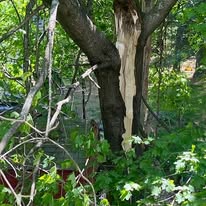
Once you and your family are safely clear, take photos and a short video from a safe distance — the tree, where it landed, any damage to the house, fence, car, or roof, and the surrounding yard. Wide shots and close-ups both help. This documentation makes your insurance claim faster and gives your adjuster a clear picture of what happened before any cleanup starts. Keep our invoice with your claim paperwork too — most policies want proof of the emergency work performed.
Step 5: Call a tree crew to make it safe
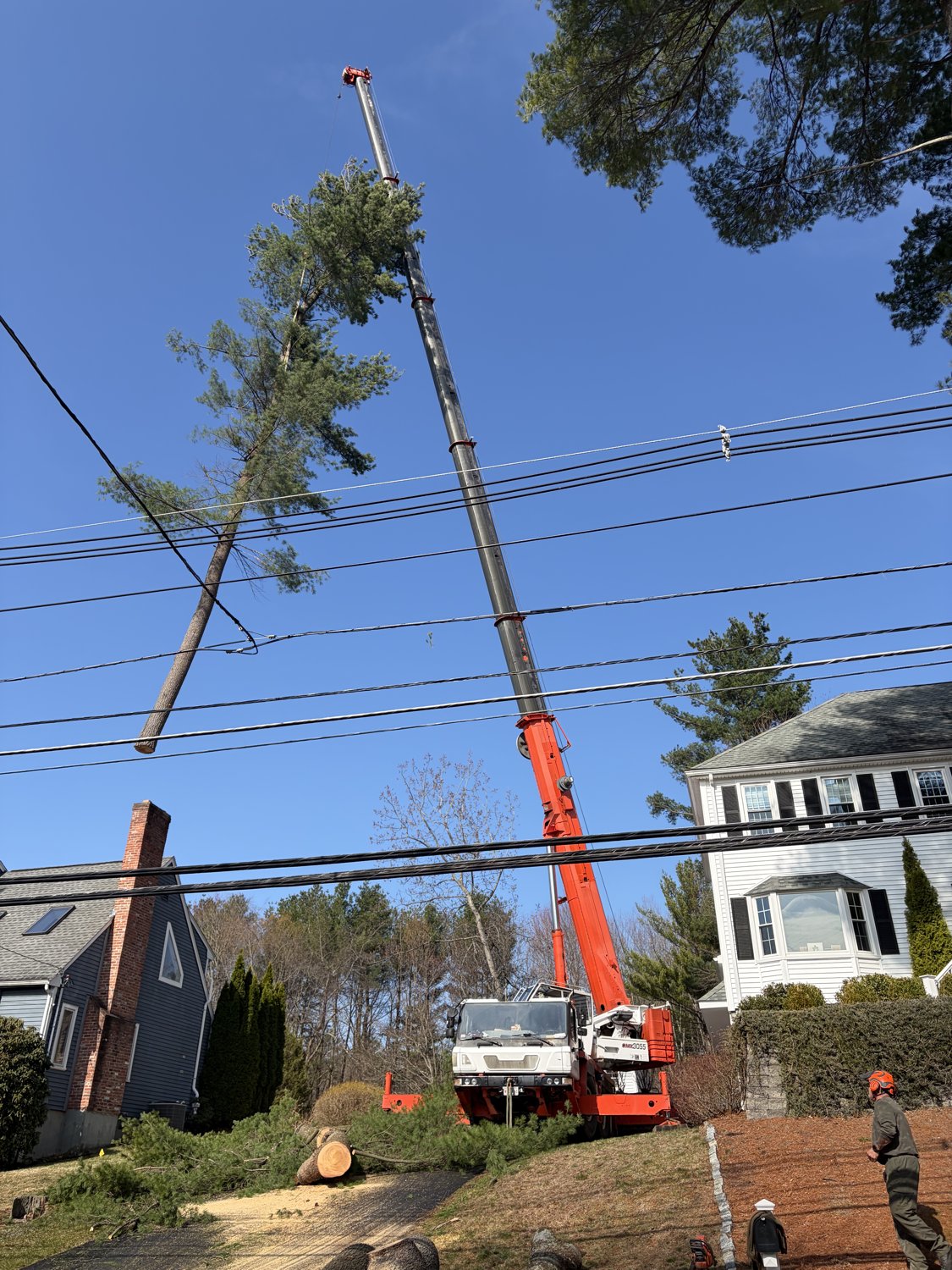
Once everyone's safe, wires are handled, and you've got your photos, call us. We'll talk through what happened, get a crew and the right equipment headed your way, and make the property safe — whether that means removing the tree entirely, cutting it back off the structure, or stabilizing what's left until a full removal can happen. For trees over a house, tangled in wires, or too large to reach safely, we bring in crane services to lift sections out cleanly instead of dropping them. The full job is storm and emergency tree removal, priced for the urgency and risk involved.
Is this a true emergency, or can it wait?
Not every fallen tree needs a crew tonight. Here's a quick way to tell the difference:
- Call right away: a tree or branch is touching power lines, resting on your house or another structure, blocking your only way in or out, or leaning in a way that still looks like it could fall further.
- Can wait for a normal appointment: a tree or large limb is down in the open yard, away from structures and driveways, not touching any wires, and not blocking access to your home.
If you're not sure which one you're looking at, call us anyway. We'd rather tell you it's safe to wait than have you guess wrong. And if the tree is simply weak, leaning, or storm-stressed but hasn't come down yet, that's worth a look too — our tree removal cost guide covers what a planned removal typically runs, versus emergency pricing.
How fast Tree Sons responds in Central MA
We're based in Northborough and work storms and emergencies across Metrowest and Worcester County. When you call with an active emergency, we move it to the front of the schedule — a crew comes out, assesses the hazard, and gets your property safe first. Full cleanup and stump work can follow once the immediate danger is handled. If a storm has hit a wider area, response times stretch as we work through calls in order of severity, so tell us clearly what's happening — on the house, on wires, or blocking the driveway — so we can prioritize correctly. For a closer look at what a bigger storm event looks like across the region, see our storm damage cleanup guide for Metrowest.
What to have ready when you call
A few quick details help us get to you faster: your address, whether the tree is touching power lines or a structure, whether anyone is trapped or hurt (call 911 first if so), and whether the driveway is passable for our truck. You don't need to know anything technical — just tell us what you're looking at.