 Tree SonsTree Service
Central Massachusetts gets a real mix of storm damage over the course of a year, and every season brings its own kind of tree trouble. We've been out clearing it since 2013, from Northborough through the rest of MetroWest and Worcester County — here's what actually happens to trees in a storm, how to check your property safely, and what to do next.
The Storms That Do the Damage Around Here
Late-winter nor'easters bring high, sustained wind gusts that snap weak limbs and topple shallow-rooted trees. Ice storms coat every branch in a layer of ice, and a mature oak can be carrying thousands of extra pounds before a single limb finally lets go. Heavy, wet March snow — the kind that clings to every needle — is brutal on white pines, which bend and split under the weight far more than hardwoods do. And in summer, a fast-moving microburst or thunderstorm can drop a healthy-looking tree in seconds with almost no warning at all. If you're in Northborough, Southborough, Westborough, Marlborough, Shrewsbury, or Grafton, you've probably seen at least one of these firsthand — the big oaks and white pines that shade most Central MA yards are exactly the trees that fail hardest in ice.
Assess the Damage Safely — Don't Walk Under It
Before anything else, walk the property from a distance and look up, not just at what's on the ground. Storm damage isn't always obvious. A tree can look fine at the base and still have cracked limbs caught in the canopy, or roots that lifted and re-settled just enough to look normal again. Stay well clear of anything leaning, split, or tangled with power lines, and keep kids and pets away from a downed tree until it's been checked. If a line is involved — sparking, touching a tree, or just draped across a branch — treat it as live and call the utility company before anyone gets close.
Hanging and Broken Limbs — Watch for Widowmakers
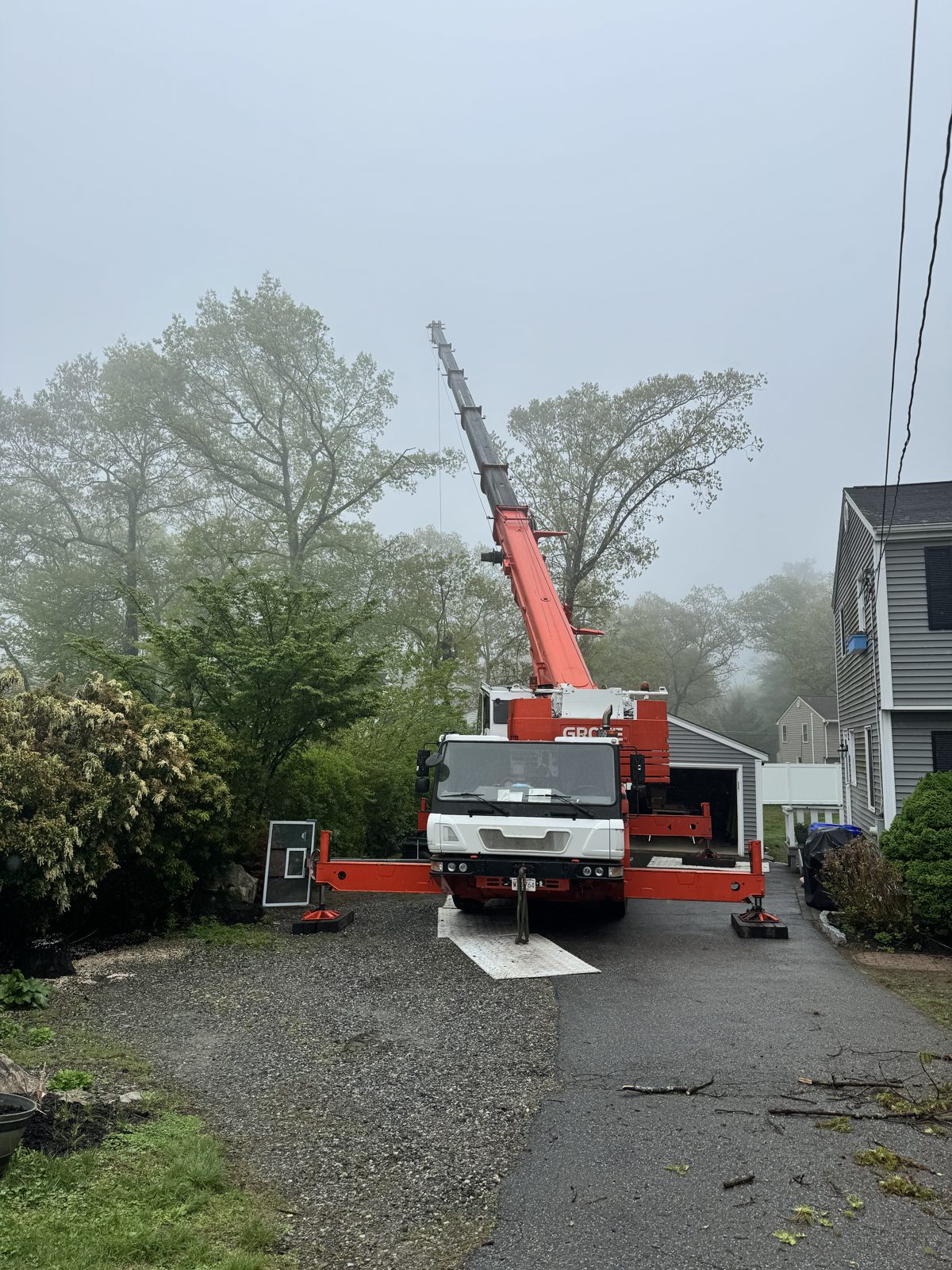
The most dangerous storm damage is often the stuff still stuck in the tree — broken limbs hanging by a strip of bark or wedged in the branches above. Crews call these widowmakers for a reason: they can let go with zero warning, long after the storm has passed and the sky is clear. If you see a limb hanging overhead, don't rake underneath it, don't mow near it, and don't try to knock it down with a pole saw from the ground. That's exactly the kind of job we handle — get it down safely with the right rigging, then haul it away.
Partially Uprooted or Leaning Trees
A tree that's leaning or partially uprooted after a storm is one of the trickiest calls a homeowner can make. Sometimes a tree that's tipped a few degrees can be safely stabilized if it's caught early — but a lot of the time, especially with shallow-rooted species or a tree that's visibly lifted the soil around its base, the root system is compromised enough that coming down is a matter of time, not if. We look at the species, how much of the root plate has lifted, how the tree is leaning relative to your house and driveway, and how healthy it was before the storm hit. When there's real doubt, removal is almost always the safer call — a leaning tree that looks stable today can come down in the next gust.
What to Photograph for Your Insurance Claim
Before any cleanup starts, take pictures from multiple angles, in daylight if you can. Adjusters want to see the tree in relation to your house, fence, or car — does it show what it hit, or what it was about to hit; the break point or root ball, so it's clear this was storm damage and not routine decline; any damage to the structure itself, like roof, siding, or gutters; and a wide shot of the yard for scale. Photograph before our crew clears anything — once the debris is gone, that documentation gets a lot harder to recreate. Keep your invoice from us too; most policies want proof of what the cleanup cost.
Why Storm Work Is Priced Differently
Storm and emergency tree work isn't priced the same way as a routine removal, and it's worth understanding why. A tree that's already come down, cracked, or is actively leaning is more dangerous to work on than a healthy standing tree — the rigging is different, the crew often has to move faster, and jobs sometimes happen in bad weather or right after a storm when everyone in the region is calling at once. We stay honest about pricing even under that pressure — no gouging, no surprise add-ons — but expect a storm removal or limb takedown to run at or above the higher end of our regular tree removal cost ranges, depending on the tree and the access. Our storm and emergency service is built around getting your property safe fast, then giving you a clear, written price for the full cleanup.
Preventative Trimming Before Storm Season
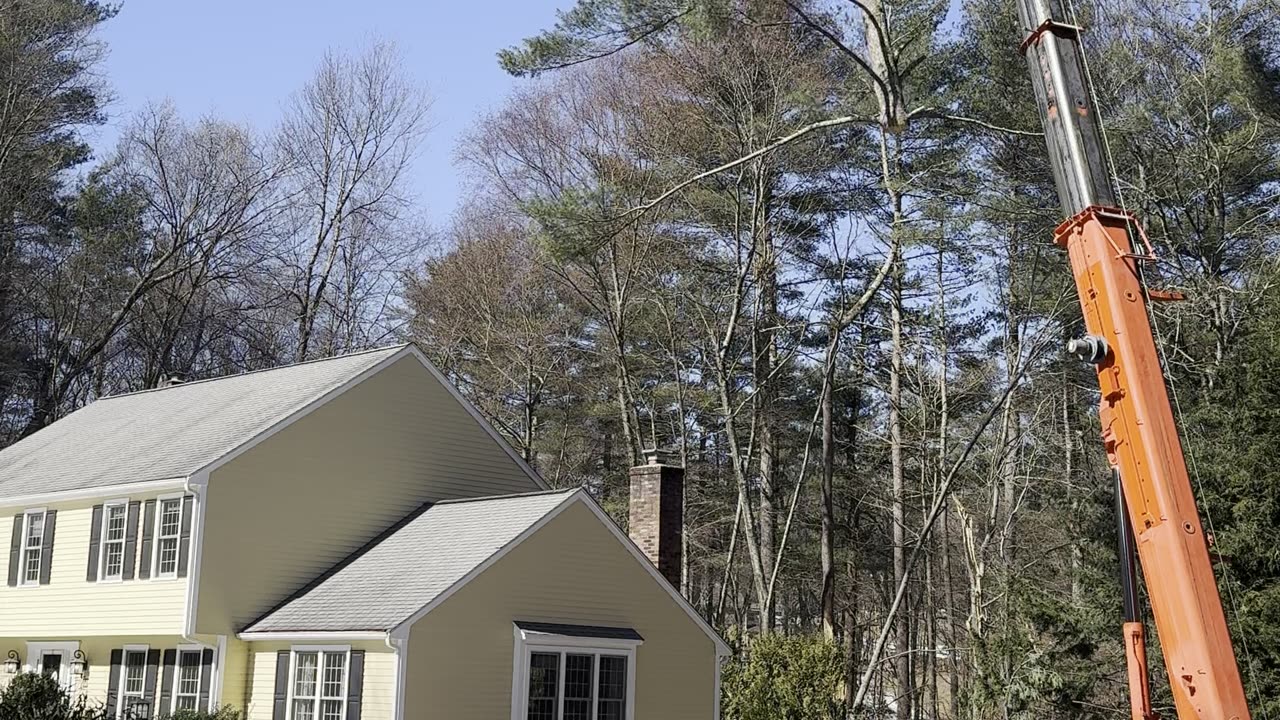
The best storm damage is the kind that never happens. A lot of what we clean up after a nor'easter or ice storm is wood that was already dead, cracked, or overloaded before the weather ever hit — deadwood in the canopy, limbs overhanging the roof, a pine with too much weight leaning one way. Regular tree trimming takes that risk out before it becomes a middle-of-the-night call. Late summer and early fall, ahead of the first nor'easter or ice storm of the season, is the best window to have a crew walk your property and take down anything likely to fail. For big trees near the house or over wires, our crane services make it possible to take a hazardous section down cleanly without ever letting it fall toward your roof.
If a Tree Is Down on Your Property Right Now
If you're dealing with storm damage today — a tree on your roof, across the driveway, or leaning toward the house — stop reading and call us at (508) 216-0354. We'll walk you through keeping everyone safe on the phone, then get out to assess and clear it. For a fuller walkthrough of the first few minutes after a tree comes down, see our guide on what to do in a tree emergency. Estimates are always free, no obligation, and we'll give you a straight answer about what the storm actually did to your tree — not just an invoice.