 Tree SonsTree Service
Stump grinding and stump removal both get rid of an ugly stump, but they're two different jobs with two different price tags. Stump grinding uses a machine to grind the wood down below grade, filling the hole with the resulting chips — the stump disappears, the roots stay in the ground and break down on their own over the next few years. Stump removal means digging out the whole thing, stump and root ball together, which tears up a lot more of the yard and takes a lot more time. We've ground and removed stumps all over Northborough and Central Massachusetts since 2013, and nine times out of ten, grinding is the right call. Here's why, and when it isn't.
Stump grinding: fast, affordable, and enough for most yards
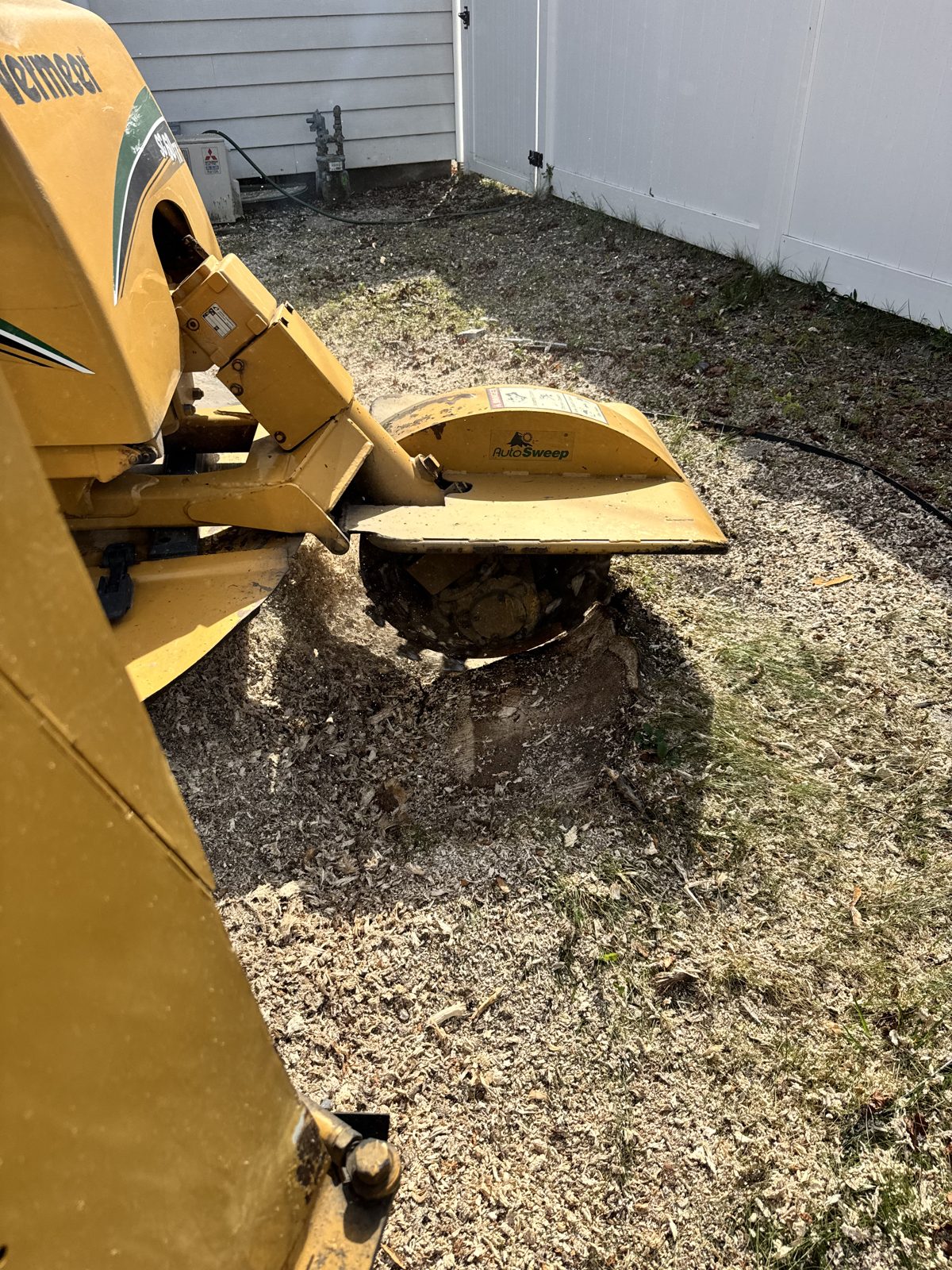
A stump grinder is a wheel of carbide teeth that chews straight down through the wood, turning the stump into a pile of wood chips as it goes. For a typical residential stump, the whole job takes well under an hour. There's no digging, no big equipment tearing across the lawn, and no gaping hole left behind — we backfill with the chips and loose soil, rake it level, and you're left with a spot you can mow over or reseed.
Because it's quick and low-impact, grinding is the default answer for almost every homeowner. If your goal is simply "I don't want to look at that stump anymore" or "I don't want to mow around it," grinding gets you there for a fraction of the cost and disruption of a full removal.
What happens to the roots after grinding?
This is the question we get the most, and it's a fair one. Grinding only takes out what's above and just below the surface — the larger structural roots spreading out under your lawn stay right where they are. Left alone, they'll decay naturally over the next several years as any dead wood does. They won't send up new sprouts once the visible stump and root collar are gone, and for lawn purposes they're essentially inert. The one thing to expect: as those old roots break down, the ground above them can settle slightly, so don't be surprised if you need to toss down a little extra soil and grass seed a season or two later.
Grinding depth — how far down do we go?
Standard residential grinding goes about 4 to 6 inches below grade. That's plenty to mow over, reseed, or lay mulch on top without hitting wood. If you're planning to pour a patio, set a paver path, or lay sod that needs a perfectly flat, root-free base, we can grind deeper on request — just tell us the plan when we quote it, since it changes the time and price.
Full stump removal: when you actually need it
Stump removal means digging the entire stump and root ball out of the ground, usually with an excavator or a stump-pulling attachment, then hauling it away and filling the hole. It's a bigger job — more time, more equipment, more disturbance to the surrounding lawn and soil — and it isn't something we recommend unless you have a specific reason for it. The two situations where full removal actually matters:
- Replanting in the exact same spot. Old roots and leftover wood can carry disease or simply get in the way of a new tree's root system. If you want to plant a new tree in that precise location, the old root ball needs to come out first.
- Building over it. A shed, patio, driveway extension, or foundation work can't sit on top of decaying roots — they'll shift and rot as the structure settles. That calls for a full dig-out, not a grind.
Outside of those two cases — new lawn, garden bed, general yard cleanup, or just wanting the eyesore gone — grinding does the job without the extra cost and mess.
Cost, time, and mess — side by side
Cost: grinding is the more affordable option by a wide margin; removal costs considerably more because of the extra labor, equipment, and disposal involved. Time: grinding a typical stump takes under an hour; removal can take several hours depending on the root system and access. Mess: grinding leaves a small pile of wood chips and a patch of loose soil; removal leaves a genuine hole in your yard that needs to be backfilled, and often some torn-up grass around it while the equipment maneuvers. For most homeowners, that difference alone settles the question.
Stump grinding is quoted separately from tree removal
One thing worth knowing before you get an estimate: stump grinding is not automatically included when you have a tree taken down. It's priced and quoted as its own line item, alongside the tree removal itself. If you know you'll want the stump ground down once the tree is gone, just say so up front — we'll include it in the same visit and the same estimate, so you're not scheduling a second trip later.
Which one do you need?
If you're not sure, the safest assumption is grinding — it covers what almost every homeowner actually wants, at a fraction of the cost of digging the whole thing out. The only time to plan on full removal is if you're putting something permanent in that exact spot. Either way, the real answer depends on the stump, the soil, and what you're planning to do with the space, so a quick on-site look is the fastest way to know for sure.