 Tree SonsTree Service
Marlborough's mix of mature street trees, wooded backyard lots near the Assabet River, and newer developments along Route 20 means no two properties face quite the same tree issues. But the calendar treats them all the same way — and the biggest tree problems we see aren't random, they follow the seasons. If you know what to watch for each time of year, you catch small issues before they turn into an emergency call. This guide walks through what we look at, season by season, on the properties we service near our Marlborough tree service page — feel free to use it as your own yearly checklist.
Spring: Assess Winter Damage and Shape New Growth
Spring is when winter's effects finally show. As soon as the snow clears, walk your property and look up. Broken or hanging limbs that ice and heavy snow left cracked but still attached are the most common spring hazard — they can look stable and then let go without warning, especially in wind. Check the base of each tree too: frost heave and freeze-thaw cycles can loosen root systems on trees that are already stressed or declining, and a slight new lean since fall is worth a second look.
Spring is also the best window for structural trimming on most deciduous trees. Before the leaves fill in, you can see a tree's actual branch structure — crossing limbs, weak crotches, and dead wood are all easier to spot and correct. Getting ahead of it in spring means a tighter, healthier canopy by summer instead of a tangle of competing branches.
Summer: Watch for Storm and Microburst Limb Risk
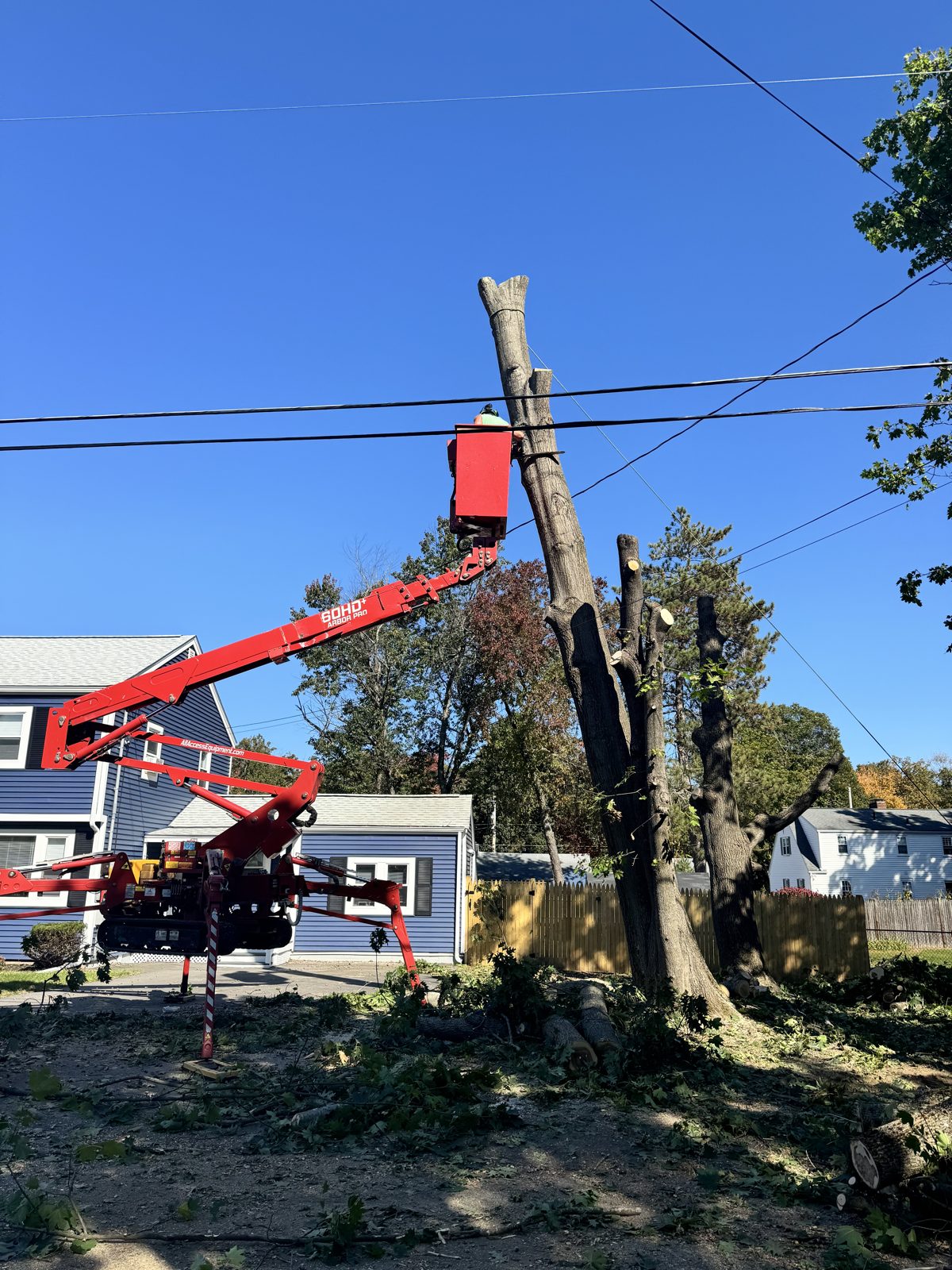
Full leaf cover changes the math on your trees. A fully leafed-out limb catches far more wind than a bare one, and Massachusetts summers bring the kind of fast-moving thunderstorms and localized microbursts that can snap a healthy-looking branch in seconds. The limbs most likely to fail are ones with existing deadwood, weak V-shaped forks, or heavy end-weight from a season of new growth — all things that are much harder to spot once the canopy is full.
This is a good season to have obvious deadwood cleared out before a storm finds it for you, and it's the season we get the most emergency calls. If a storm does take a limb or a whole tree down on your property, our storm and emergency service is built for exactly that — see our guide on storm damage cleanup in Metrowest for what to do first.
Fall: Pre-Winter Trimming and Clearing Rooflines
Fall is your last real chance to get ahead of winter. Once leaves drop, it's another good structural-trimming window — similar to spring, but this time you're prepping the tree to carry snow and ice load instead of new growth. Removing dead or weak wood now means less breakage risk once storms start.
Two things matter most for Marlborough homeowners specifically: clearing branches that overhang your roof and gutters, and dealing with any tree that's already leaning toward the house. Leaves and small debris in gutters trap moisture against the roofline all winter, and a limb that's fine in October can be the one that comes down under two feet of wet snow in January. If a tree along your fence line or driveway has been getting closer to power lines or the house over the past year or two, fall is the time to trim it back — or decide it's time to remove it. Our guide on trimming vs. removing a tree walks through how we make that call.
Winter: Ice and Snow Load, Emergency Response, and When to Remove
Winter is when tree failures actually happen most — ice-coated branches and heavy wet "Nor'easter" snow put weight on limbs they were never built to carry, and it doesn't take much for something to give. If a branch is visibly bowing under snow, don't shake it or knock it down yourself; the sudden release of tension can be more dangerous than the weight itself. Give it time to melt, or call us if it's over a walkway, driveway, or roofline.
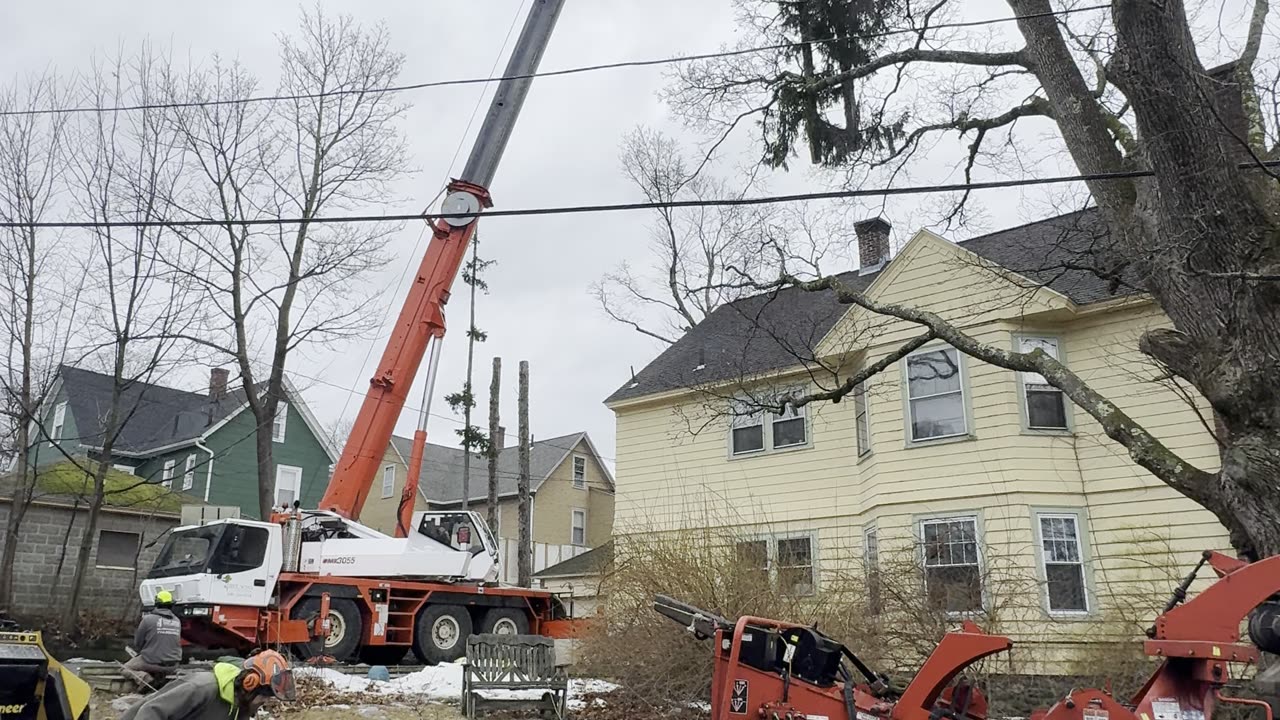
Winter is also, somewhat counterintuitively, often the best time to remove a tree. With the ground frozen, our equipment can access a yard without leaving ruts in the lawn, and with no leaves on the tree, a crew can see the whole structure clearly before cutting. Dormant trees are also less stressed by the work. If you've had a tree on your list to remove — especially a large one that needs equipment access across the yard — winter is frequently the cleanest time to do it, and we run emergency response throughout the season for anything that can't wait.
A Simple Seasonal Rhythm
None of this requires a complicated maintenance plan. It comes down to: check for damage in spring, watch for storm risk in summer, trim and clear rooflines in fall, and stay alert for ice and snow load in winter. Most Marlborough properties do fine with one good trim a year plus a quick seasonal look-over — the trouble usually starts when a tree gets ignored for several years in a row. If it's been a while since anyone looked at your trees, a free estimate is the easiest way to find out where you stand.